Table of contents
Airports are tightening their digital grip, and border checks are no longer only about passports, visas, and customs forms. In several countries, officers can ask to inspect phones, laptops, and online accounts, a shift that has turned a “forgotten password” into a very real point of friction. Travelers often assume that refusal is a simple choice, but the outcome can be denial of entry, device seizure, or hours of questioning. The rules vary widely, yet the consequences are consistently disruptive.
Border checks now reach into your phone
How did we get here so fast? Over the past decade, border agencies in a number of jurisdictions have expanded their focus from physical luggage to digital footprints, arguing that modern travel risks, from serious crime to immigration fraud, can be signaled by what is stored on a device or accessible through it. In the United States, for example, Customs and Border Protection reports conducting tens of thousands of electronic device searches each year, a figure that rose sharply in the late 2010s and has remained a subject of intense scrutiny among civil-liberties groups, even as overall passenger volumes fluctuate; the agency’s own public statistics have repeatedly shown that these searches represent a tiny fraction of total arrivals, but still involve many thousands of individuals annually.
In the European context, practices differ by member state, and the legal scaffolding often sits at the intersection of national police powers, border rules, and data protection. The United Kingdom, no longer in the EU, has also faced legal and political debate over the scope of powers to examine devices at ports and airports, and in Canada, the border agency has updated internal guidance in recent years amid court challenges and public pressure. The common thread is that “device search” can mean anything from scrolling through photos to asking for access to messaging apps, email, cloud storage, and social-media accounts. That is where passwords become a practical problem, because the technical reality of modern encryption, biometric locks, and two-factor authentication means that without a code, officers may not be able to view anything on the spot, and the traveler may be left negotiating under stress, fatigue, and time pressure.
Forgotten password, real-world consequences
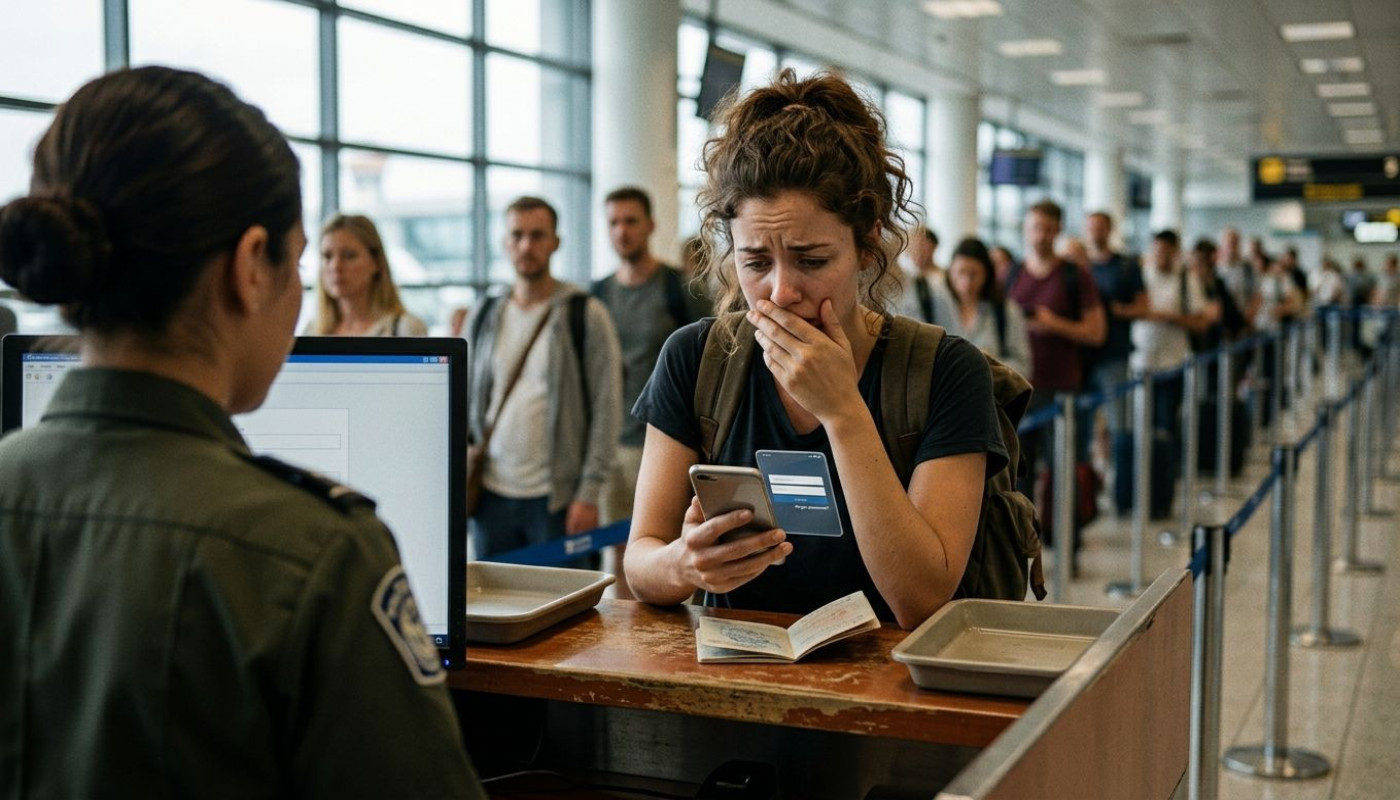
It sounds trivial until it happens. When an officer asks to see specific content, or requests that you unlock a device, “I don’t remember” can be interpreted in multiple ways: as genuine, as evasive, or as a refusal by another name. The immediate consequences can include extended secondary screening, missed connections, and in some jurisdictions, temporary retention of devices for off-site examination, an outcome that can be devastating for business travelers carrying work phones, journalists protecting sources, or families relying on a single device for bookings and documents. Even when the traveler is eventually admitted, the day can unravel, and a travel plan built on tight margins rarely survives a multi-hour delay.
There is also the less visible cost: the pressure to make quick decisions about privacy, compliance, and risk. Legal experts routinely warn that the border is not a typical environment for asserting rights, because entry is often discretionary for non-citizens, and agencies may have broader search powers than domestic police. A traveler who hesitates, fumbles credentials, or cannot access an account may be treated as a higher-risk profile, fairly or not, simply because officers must decide quickly, and uncertainty tends to invite more questions. Add the reality of account lockouts after too many failed attempts, or two-factor authentication that requires a SIM card you cannot access abroad, and a password slip can escalate into a practical impasse, even without any wrongdoing.
What officers can ask, and what you can do
So, what are you actually required to do? The honest answer is jurisdiction-dependent, and that is precisely why travelers get caught off guard. In some places, officials can request access to devices and ask questions about online activity, and while travelers may have legal avenues to challenge certain demands later, at the moment of inspection the immediate stakes are admission, delay, and potential seizure. In the United States, citizens cannot be refused entry, but devices may be searched, and prolonged questioning is possible; non-citizens can face refusal of admission. In other countries, the balance between cooperation and refusal can look different, but the practical leverage at the border often sits with the officer in front of you, not with the traveler’s interpretation of a policy memo.
Preparation, therefore, is less about paranoia than about reducing avoidable friction. First, ensure your devices are updated and functioning, because failed updates and corrupted password managers are a common, mundane cause of lockouts. Second, consider how your two-factor authentication works abroad, since SMS codes can fail when roaming is disabled, a SIM is changed, or a device is in airplane mode. Third, separate travel-critical accounts from everything else, and make sure you can access boarding passes, hotel confirmations, and digital IDs without needing to unlock layers of unrelated apps. Finally, if you use professional tools for cross-border logistics, compliance paperwork, or identification numbers tied to customs processes, it helps to have the relevant references accessible without improvisation, and that may include checking resources in advance and keeping them saved securely; if you need a starting point for such services, you can look at this site and confirm what applies to your situation before you travel.
Data hygiene: the smartest pre-flight ritual
Forget the travel “hacks” for a moment. The most effective habit is data hygiene, because border inspections are stressful precisely when your digital life is messy. Start with a clear inventory: which devices are you carrying, what accounts are logged in, and what information is locally stored versus cloud-only. On many modern phones, messaging backups, photo libraries, and document folders can contain years of personal history, and travelers often underestimate how easily an innocuous screenshot, an old email thread, or an automatically downloaded file can be misunderstood out of context. Cleaning up does not mean deleting evidence; it means minimizing noise, organizing what you need, and avoiding a situation where you cannot even find the relevant documents under pressure.
Password discipline matters here more than raw security jargon. Use a reputable password manager, but also plan for the moment when it fails: keep recovery codes in a secure, offline location, and test your ability to log in on a secondary device before departure. If your authentication depends on a single phone, a lost battery or a broken screen can lock you out more effectively than any border officer could. Business travelers should coordinate with IT teams about travel profiles, device policies, and what happens if hardware is detained. Journalists, lawyers, and clinicians should consider professional guidance, because confidentiality obligations can collide with on-the-spot demands, and the wrong decision in a border queue can have repercussions long after the trip ends.
Before you fly, budget time and reduce risk
Plan a buffer for airports where secondary screening is common, and assume that digital checks, even rare in percentage terms, can be slow when they happen. If you are traveling for work, factor in contingencies for device loss or temporary retention, and consider insurance that covers electronics. Where available, seek official guidance and, if needed, legal advice before departure; the cheapest fix is often preparation, not damage control at arrivals.
On the same subject

What Companies Overlook In Document-related Client Assistance

From Archives To Innovation: How Historic Registries Inform Future Compliance

Are Schools Missing Out On The Productivity Benefits Of AI Chatbots?

How Simplified VAT Processes Boost E-commerce Across The EU?

Exploring The Unique Benefits Of Wood Therapy In Lymphatic Drainage

Insights Into The Decision-making Process Of Top Entrepreneurs

Exploring The Benefits Of Free AI Chatbot Services For Customer Support

Artificial Intelligence: Unearthing the Ethical Dilemmas

Breakthrough in Renewable Energy Sources
